Asia pacific regional learning hub

A REGIONAL RESOURCE CENTER FOR THE COMMUNITIES

Newsletters

Asia Pacific Regional Learning Hub-Monthly-Newsletter- June 2026   The Global Fund’s Grant Cycle 8 (GC8) comes with major strategic changes that are highly technical. Having access to this information is essential for community leaders, civil society networks, and CCM members to engage in the process effectively.   To simplify these complex guidelines developed by the…

Resource

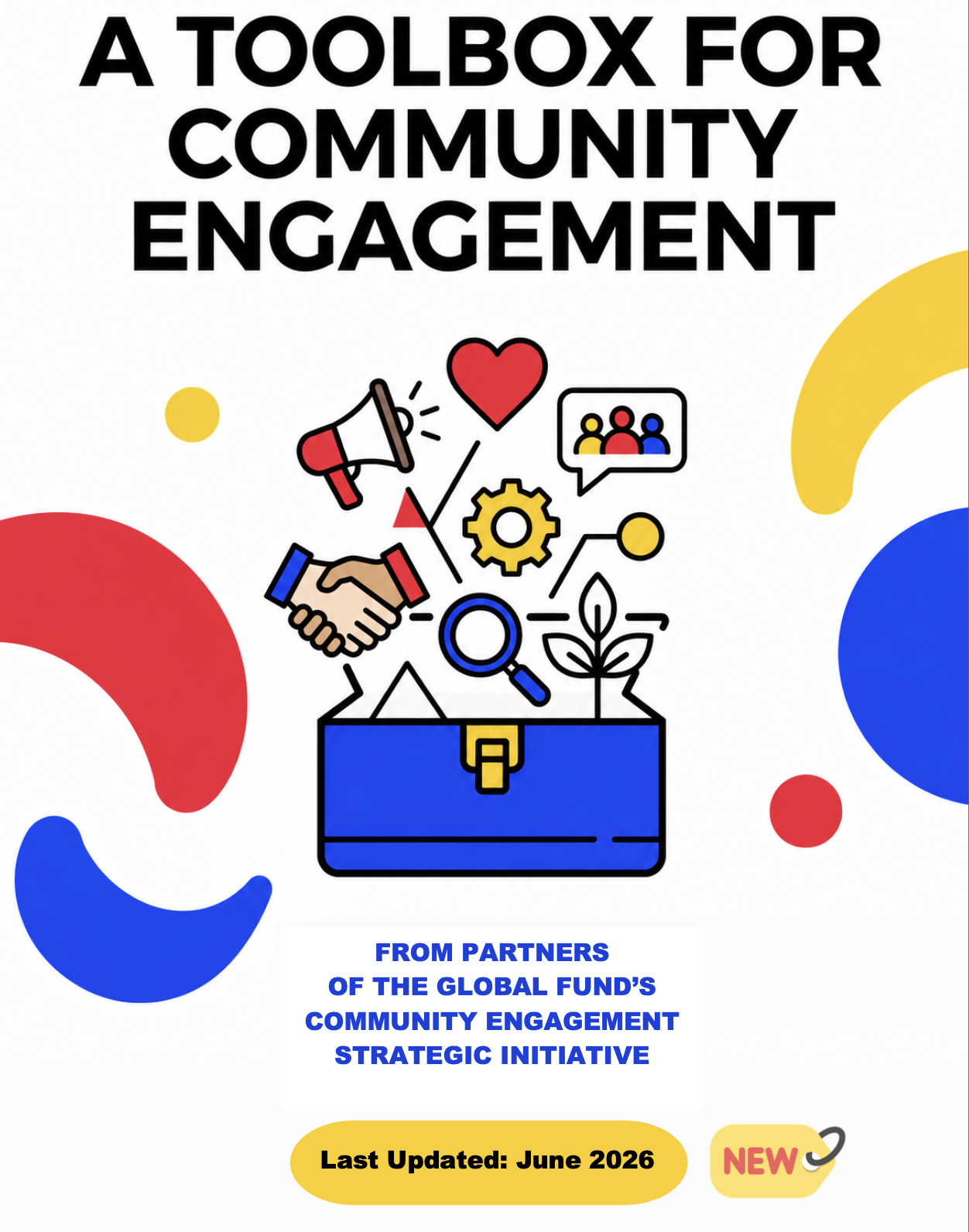
This Toolbox contains 140 free, action-oriented resources in 13 different languages. They can be used to help strengthen and support community engagement in Global Fund-related processes. built by communities, for communities . Learn more about Community Engagement Toolbox Resources for GC8.    

Newsletters

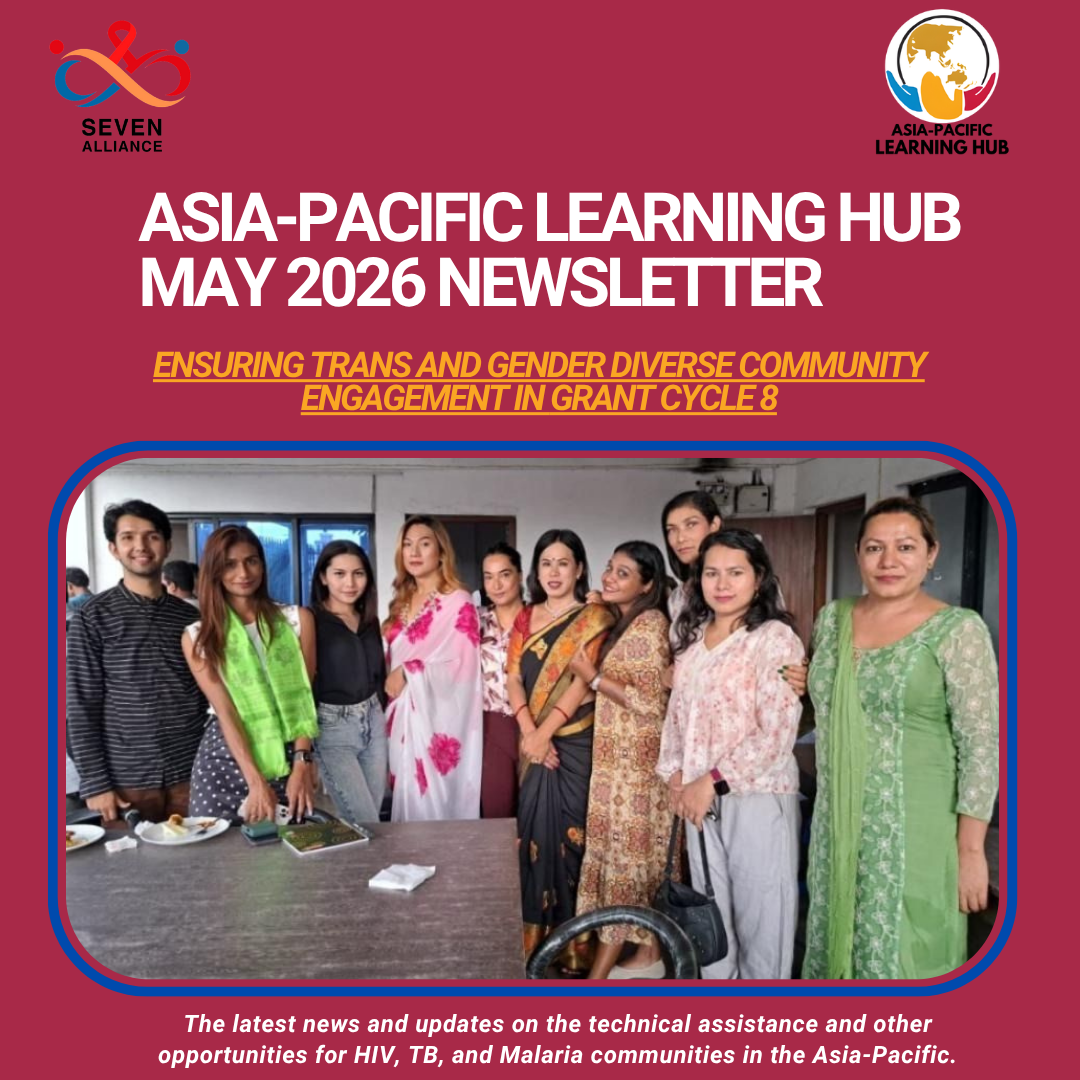
Asia Pacific Regional Learning Hub-Monthly-Newsletter- May 2026   The Global Fund’s Grant Cycle 8 (GC8) for 2026–2028 arrives as the most resource-constrained cycle yet, introducing major strategic shifts like mandatory Community Priorities Annexes and accelerated transitions to domestic funding. To protect trans and gender diverse-led programs from budget cuts, communities must strategically align their priorities…

Resource

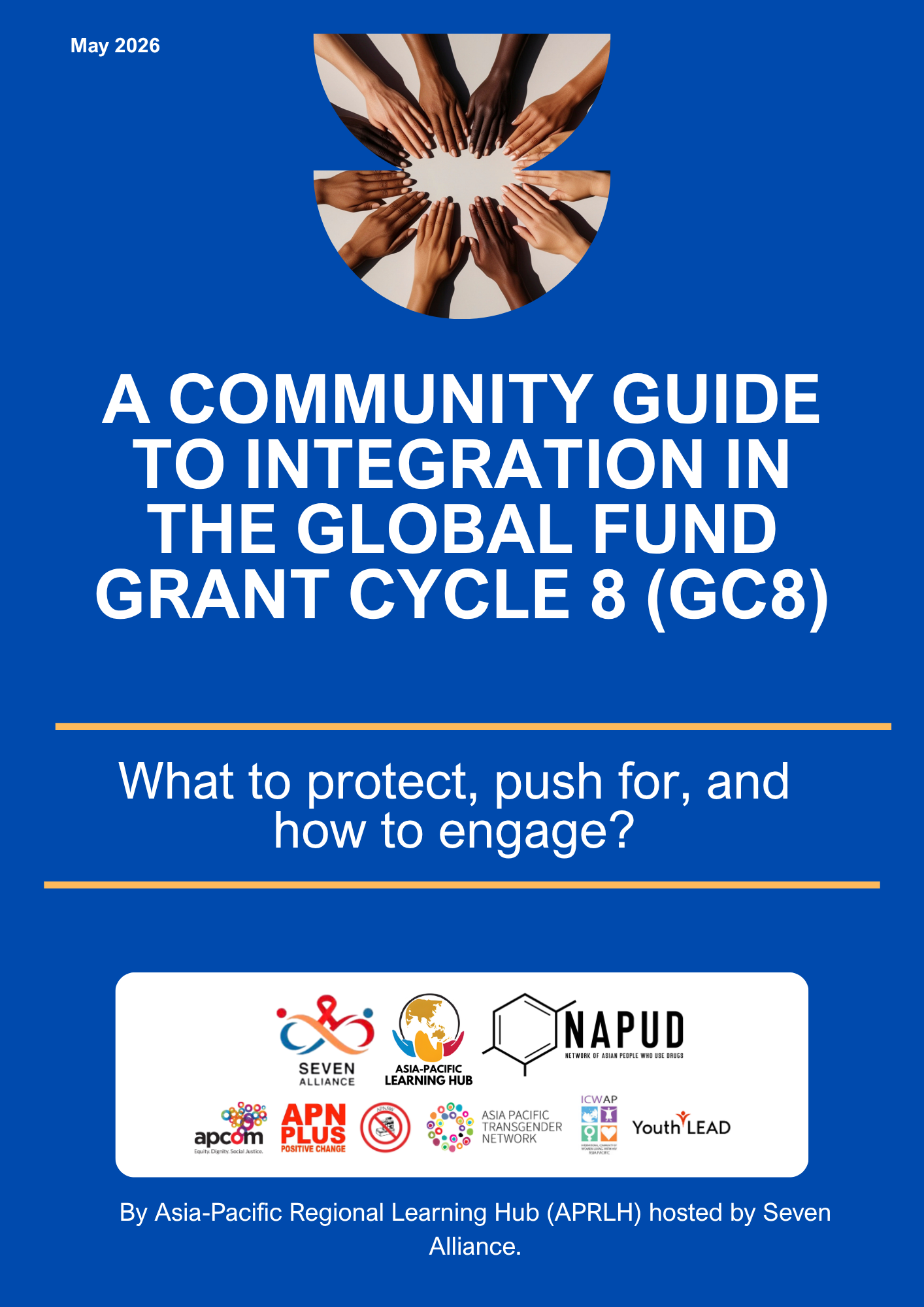
A COMMUNITY GUIDE TO INTEGRATION IN THE GLOBAL FUND GRANT CYCLE 8 (GC8) What to protect, push for, and how to engage? This guide is a strategic toolkit published in May 2026 by the Asia-Pacific Regional Learning Hub (APRLH) hosted by Seven Alliance. It is designed to help community-led organizations,  networks, community leaders and civil…

Newsletters

Asia Pacific Regional Learning Hub-Monthly-Newsletter-April 2026   As we transition into Grant Cycle 8 (GC8), the strategy is shifting. We’re moving beyond just data collection toward a more integrated, advocacy-driven approach. This newsletter is packed with essential updates to help your community navigate these changes, including a look at the new CRSS Maturity Framework to…

Newsletters

Asia Pacific Regional Learning Hub-Monthly-Newsletter-March 2026    The funding landscape in Asia and the Pacific is shifting as countries transition towards domestic finance.    Learn more about  how to safegaurd community-led programs and maintain equitable access to health servicesduring this critical time  by reading our March 2026 Newsletter!   Download  

Introduction

Operating under the Community Engagement Strategic Initiative (CE SI) of the Global Fund to Fight AIDS, Tuberculosis and Malaria (Global Fund), the Regional Learning Hubs aims to strengthen the engagement of communities and civil society living with, affected by or vulnerable to HIV, TB, and malaria in Global Fund and related processes by amplifying information, updates and best practices; brokering diverse learning platforms; and assisting communities in accessing technical assistance.  The Learning Hubs contribute to two key outcomes of the CE SI:

  1. Communities access timely and relevant Global Fund -related information.
  2. Communities drive program quality based on adoption of global guidance and sharing best practices.

The expected catalytic effect of the CE SI is that strengthened leadership and engagement of communities most affected by HIV, TB and malaria in Global Fund and related national processes, throughout the grant life cycle, improves impact of Global Fund investments.

The Asia Pacific Regional Learning Hub is a space to facilitate peer exchange and learning, capacity building, and collaboration to strengthen the engagement and leadership of communities most affected by HIV, tuberculosis and malaria in Global Fund and related processes. It is hosted by the Seven Alliance consortium.

  • Spot Learning Gaps: Conduct surveys to identify learning needs among communities affected by HIV, TB, and malaria for better engagement in Global Fund processes.  
  • Share Updates: Disseminate the latest information relevant to community engagement in Global Fund processes through webinars and newsletters.  
  • Foster Learning: Unite community representatives, technical partners, and stakeholders to exchange insights via webinars, meetings, and scientific events.  
  • Secure Technical Assistance: Aid communities in accessing technical assistance from the Global Fund and other providers by facilitating and supporting the application processes.  
  • Boost Local Support: Provide in-country community engagement support through small grants.  
  • Highlight Success Stories: Craft case studies to spotlight effective community engagement practices and lessons learned.  

Communities and civil society engaged in HIV, TB, and malaria responses at the country level in the Asia-Pacific region can connect with the Regional Learning Hub for various purposes, including accessing information, sharing best practices, and seeking support for Technical Assistance applications, among others.

  • HIV Key population networks and organizations
  • Youth-led networks and organizations
  • Women’s networks and organizations
  • Networks or organizations of people living with HIV or affected by tuberculosis or malaria.
  • Civil society networks or organisations led by or working with other affected communities (e.g.migrants, refugees, miners).

The Asia Pacific Regional Learning Hub team will be happy to offer support in strengthening meaningful engagement of civil society and communities in the development, implementation, monitoring and evaluation of the Global Fund-funded programs in Asia and the Pacific, including:

  • Support in accessing technical assistance for engagement at all stages of the funding cycle, including country dialogue, participation in monitoring and implementation of the grant program, etc.
  • Support in accessing technical assistance for engagement in the development, implementation and monitoring of diverse strategies related to HIV, TB and malaria programs including national strategic plans, transition and sustainability plans etc
  • Support with issues related to the Global Fund’s structure and activities at the global, regional and country levels, its relevant procedures and policies as well as opportunities for civil society and community representatives to participate in relevant Global Fund’s processes.
  • Help to obtain the information on other issues important for ensuring meaningful participation of civil society and community representatives in the Global Fund processes to strengthen the efforts against the three diseases in the Asia and Pacific region.

One of the tasks of the Regional Learning Hub is to raise awareness among civil society and communities about technical assistance opportunities under the Global Fund’s CE SI Short term TA program, and to assist the interested parties in development of quality TA requests.

The Asia Pacific Regional Learning Hub will support potential TA requesters to:

  • Identify or strengthen TA objectives ensuring strong linkages to ongoing Global Fund related activities or interventions, or to Global Fund or related processes at the country level.
  • Support to draft TA applications to ensure quality of the requests
  • In case where the TA request is beyond the scope of CE SI TA, Regional Learning Hub will support to seek TA from other TA providers 

Therefore, if you have any questions about filling out the application form, or if you need advice on the possible content and/or quality of the request, please contact the Regional Learning Hub.

Please note that the Regional Learning Hub cannot influence in any way the approval process of a TA request.

Please address any questions regarding the work of the APRLH  or on the Global Fund’s CE SI Technical Assistance Program to Chinmy Kumar, Project Coordinator: [email protected]

Resource Bank


Case Studies (APRLH)

Country level Engagement under Asia Pacific Regional Learning Hub (APRLH)

Short-Term Technical Assistance (Facilitated by APRLH to access it)

Important links related to The Global Fund to Fight AIDS, Tuberculosis and Malaria

The Community, Rights and Gender Strategic Initiative (CRG-SI) is now known as the Community Engagement Strategic Initiative (CE-SI). The CE-SI is a project that aims to improve the participation of communities most affected by HIV, tuberculosis (TB), and malaria in national responses. The project’s objectives include:

  1. Strengthening the leadership and engagement of communities
  2. Amplifying the voice of vulnerable populations in policy and decision-making
  3. Strengthening the influence of vulnerable populations on the design and implementation of national strategies
  4. Empowering vulnerable populations to generate and use data to monitor program quality and coverage

The CE-SI is implemented by the Global Fund to Fight AIDS, Tuberculosis and Malaria. The Global Fund Board approved the CE-SI for implementation from January 2024 to December 2026.

To request CE-SI technical assistance, you can contact to [email protected]

  1. Application Form Click Here
  2. Who can apply for CE TA?
    • Key population networks and organisations.
    • Youth-led networks and organisations.
    • Women’s networks and organisations.
    • Networks or organisations of people living with HIV or affected by tuberculosis or
    • Civil society networks or organisations led by or working with other affected communities (e.g.migrants, refugees, miners)
    • Country Coordinating Mechanisms (CCMs) and Regional Coordination Mechanisms (RCMs) but only if they are developed and submitted in collaboration with the above stakeholders
  3. When can I apply?
    You can now access CRG TA at any stage of the grant within the 2024-2026 Funding Cycle, including during grant implementation and program review. The program also supports community engagement in sustainability and transition planning (STC) or other Global Fund processes like National Strategic Plan (NSP) development.
  4. What type of Technical Assistance can I request?
    • Situational analysis and needs assessments.
    • Engagement in the country dialogue processes.
    • Supporting design and implementation arrangements.
    • The CRG TA CANNOT support CCM strengthening, long-term capacity development of civil society networks and organisations, development of stand-alone tools that lack focus on community engagement, and Funding Request writing.
  5. Who will provide the support on TA?
    The CRG Department at the Global Fund Secretariat has pre-approved 26 TA providers who can deliver the TA. While the TA provider may not be from the region, in most cases (if appropriate) an Anglophone Africa provider will be sourced. You can ask for a specific provider in your application from the list of TA providers in Anglophone Africa but the CRG Department takes the final decision

Other information:

Understanding Sustainability, Transition and Co-financing in GC8-THROUGH THE COMMUNITY LENS |

Unpacking GC8 Malaria Guidance: From A Community's Lens | Joint Learning Hub Webinar

Joint Learning Hub Webinar on "Unpacking GC8 HIV guidance- From A Community’s Lens".April 23rd, 2026

Joint Learning Hub Webinar: "Unpacking GC8 TB Guidance: From A Community’s Lens."

Joint LHs Webinar on "Unpacking RSSH and PPR in GC8“ THROUGH THE COMMUNITY LENS ”- Jan 28, 2026

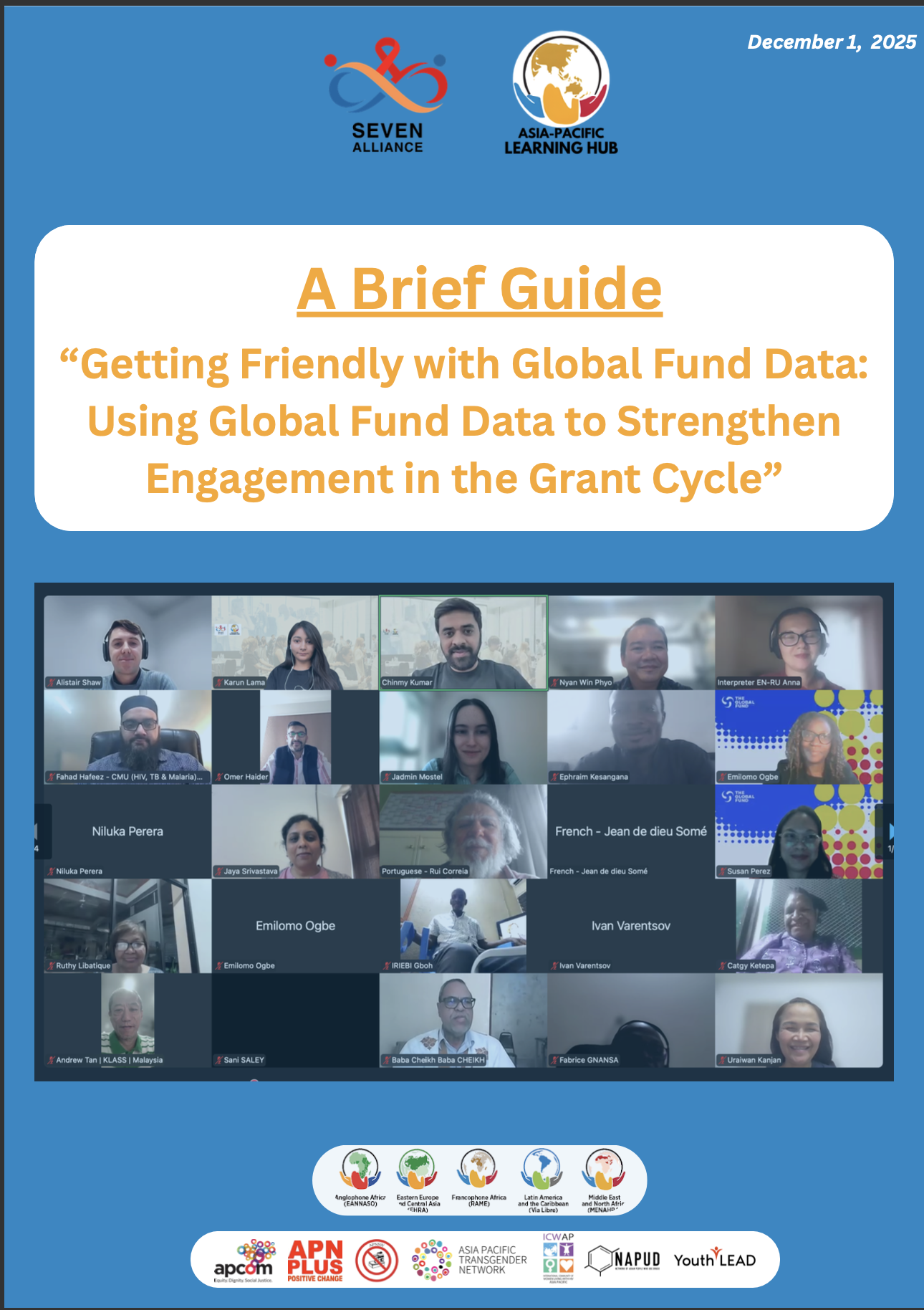
Joint Learning Hub Webinar on Getting Friendly with Global Fund Data

Get the latest news and updates

Subscription Form